


Fast, Reliable Duct Repair & Sealing Across Covina
Duct repair and sealing in Covina typically costs $180–$650 depending on whether you’re sealing joints with mastic or replacing degraded flex runs, and most jobs are completed in a single visit. We’re located in nearby Bell and regularly service Covina’s 91722, 91723, and 91724 ZIP codes, including the ranch-home corridors along Citrus Avenue and the neighborhoods backing up toward the San Gabriel Mountain front. If your system is leaking conditioned air, pulling attic debris, or circulating that familiar gray-black residue Covina homeowners know too well, call (833) 958-5022 for a free estimate.

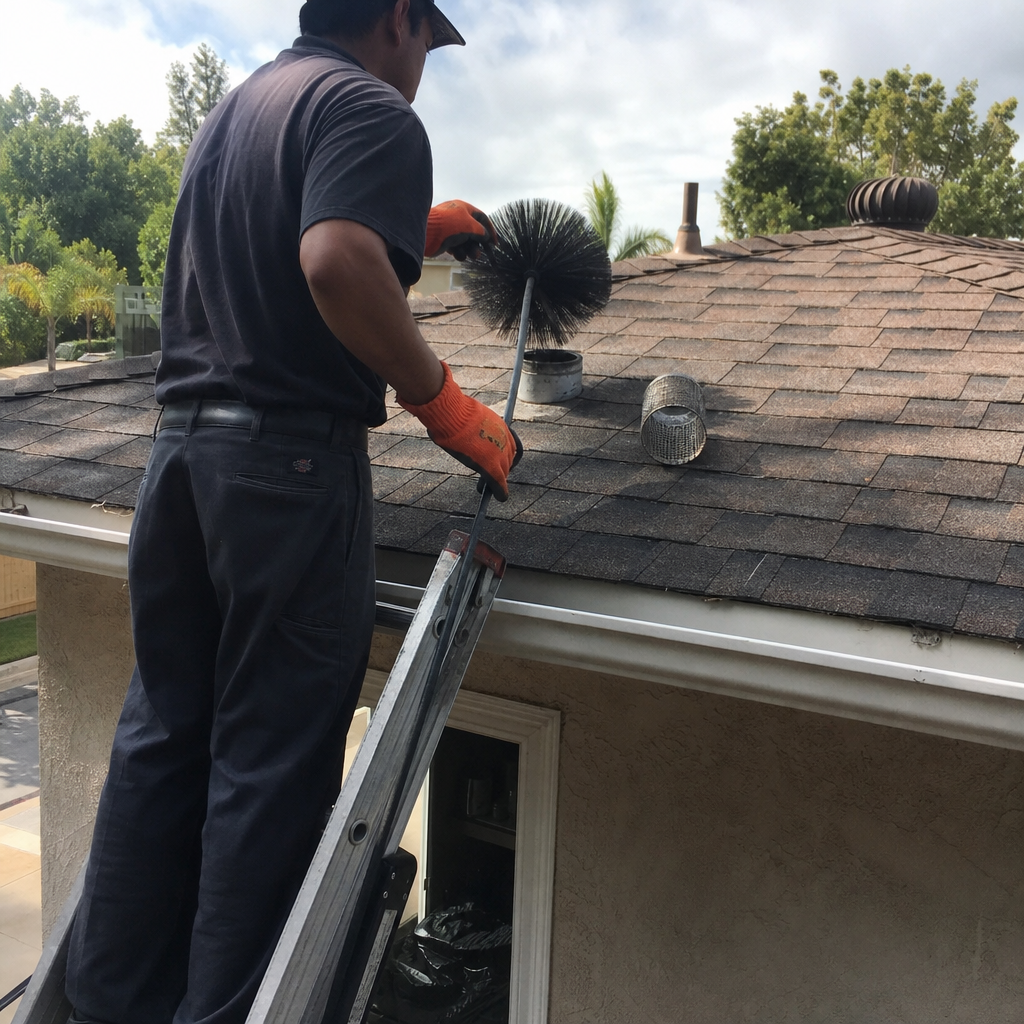
Covina’s geography creates unique duct stress that generalist HVAC crews often miss. The city sits in a smog trap against the San Gabriel Mountains, and its postwar housing stock—mostly single-story ranches built 1952 to 1975—still runs on original ductwork never designed for today’s particulate loads. Richard Anderson, owner and lead technician at Landmark Air Duct Cleaning Service California, personally handles every Duct Repair & Sealing job. That means the same person who quotes your repair is the one crawling your attic, running the Rotobrush, and applying the mastic sealant. No handoffs. No subcontractors.
Why Landmark Air Duct Cleaning Service California Is Covina’s Preferred Duct Repair & Sealing Company
Our reputation in Covina is built on 14 years of specialized air-duct work, not general handyman services with duct cleaning tacked on. Richard Anderson has crawled the attics of ranch homes from Charter Oak-adjacent pockets to the 91722 neighborhoods near Vincent, and the pattern is consistent: original sheet-metal trunks with unsealed joints, degraded fiberglass duct board shedding fibers into supply air, and that distinctive charcoal-gray smog-soot layer coating metal lines. We’ve earned a 4.9-star average across 364+ verified reviews because homeowners recognize when someone actually understands their system.
Response time matters in Covina, especially during Santa Ana wind events when dust infiltration spikes and homeowners suddenly notice every leak in their ductwork. We’re positioned to reach Covina’s core neighborhoods quickly from our Bell base, and because Richard leads every job personally, there’s no scheduling lag while a dispatcher finds an available crew. You talk to the person doing the work.
Our equipment reflects the seriousness of Covina’s conditions. We run Rotobrush rotary brush systems and Nikro negative-air extractors—the same tools commercial restoration contractors use—not consumer-grade shop vacs that recirculate fine particulate. For sealing, we apply professional mastic compounds and, where appropriate, Honeywell-compatible hardware rather than relying on foil tape that fails within seasons.
Our Duct Repair & Sealing Services in Covina
Mastic Sealant Application
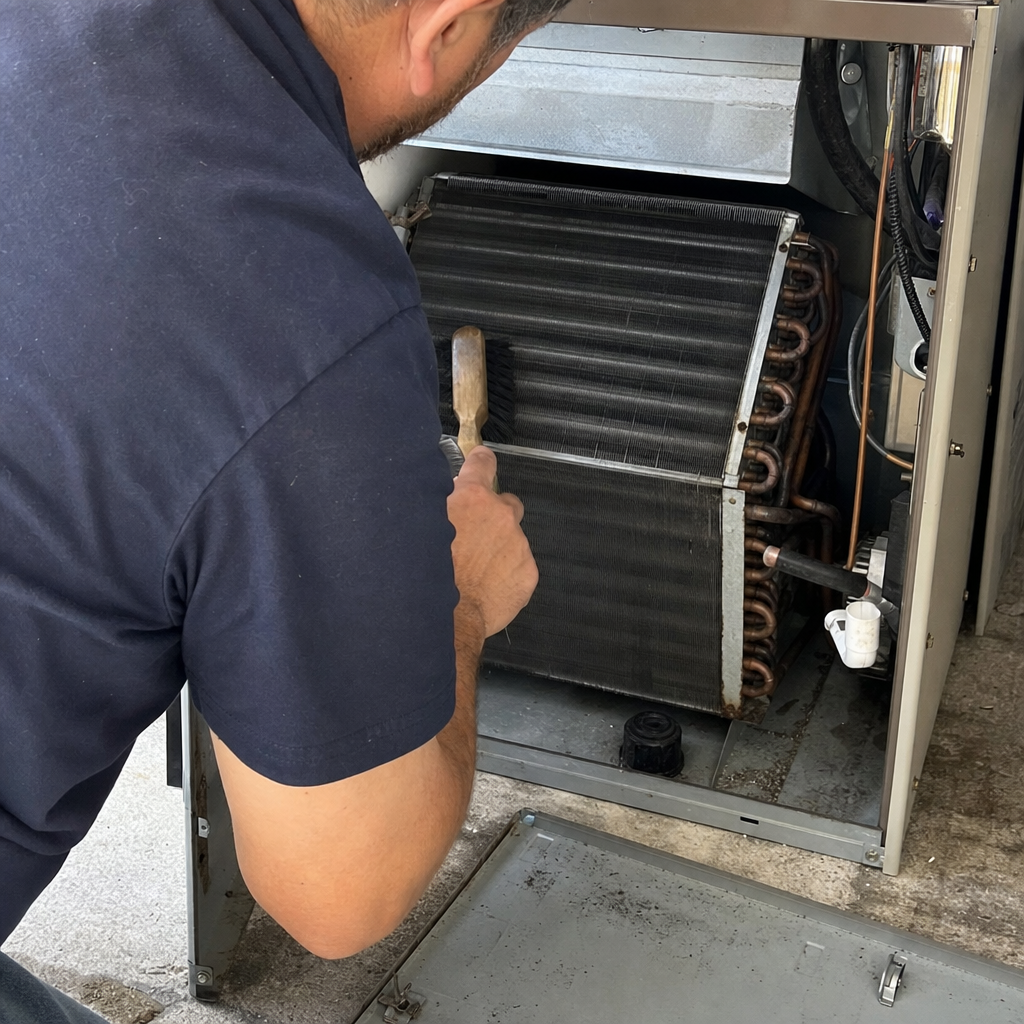
Mastic sealant is our primary weapon against Covina’s persistent air leakage. In the 91723 ranches near Citrus Avenue, we routinely find original sheet-metal trunk joints that were never sealed at installation—just nested together and wrapped with failing fiberglass tape. Santa Ana dust, attic rodent debris, and that mountain-trapped smog blow straight through these gaps. We brush on thick mastic compound, forcing it into every seam and corner, then let it cure to a flexible, permanent seal. Unlike duct tape, which dries and peels within a year or two in hot attics, mastic lasts the life of the duct. For Covina homes with heavy particulate loads, this single upgrade often drops indoor dust accumulation by half.
Metal Duct Repair
Original galvanized steel trunks in Covina’s 1950s–1970s housing are thick-gauge by modern standards, but decades of vibration, thermal cycling, and that corrosive smog-soot residue have taken their toll. We see separated seams, rust-through at low points where condensation pools, and crushed sections from past HVAC retrofits. Richard Anderson fabricates patch panels on-site or replaces short trunk sections with matching gauge metal, then seals every joint with mastic. In a 1962 ranch near the 91722/91723 boundary last year, we repaired a 14-foot main trunk where the original longitudinal seam had opened entirely—conditioned air was pouring into the attic, and the homeowner’s PG&E bills reflected it.
Air Leak Repair
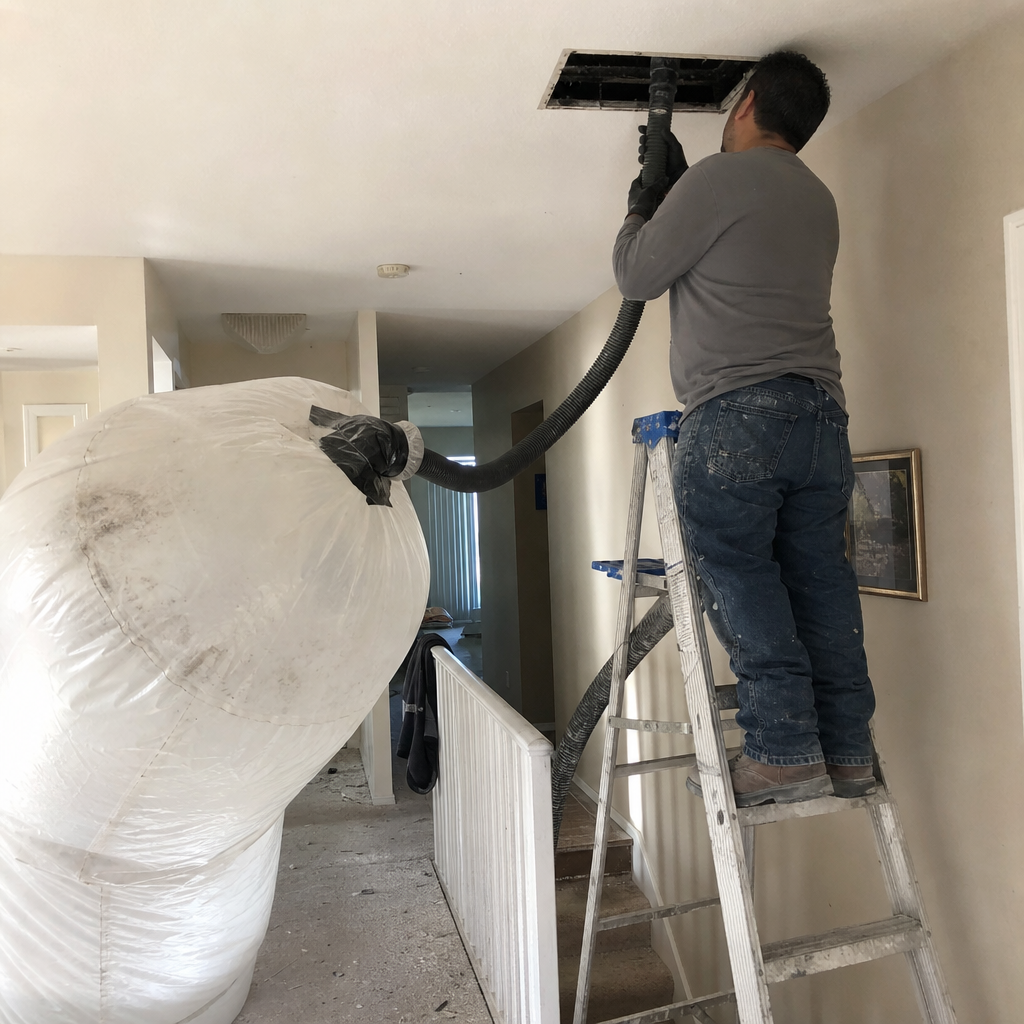
Air leak repair in Covina demands more than finding the obvious gaps. The South Coast AQMD’s nonattainment status for this basin means your return air is pulling in some of the most particulate-laden outdoor air in the continental US. We pressurize the system, use smoke pencils to trace leak paths, and prioritize the leaks that draw attic air or garage fumes into your supply stream. In Covina’s older ranches, we commonly find leaks where flex duct connects to metal trunks—the clamps loosen, the flex pulls back, and suddenly you’re circulating 150°F attic air mixed with rodent droppings and degraded insulation fibers. We secure these connections properly and seal the transition with mastic.
Flex Duct Repair
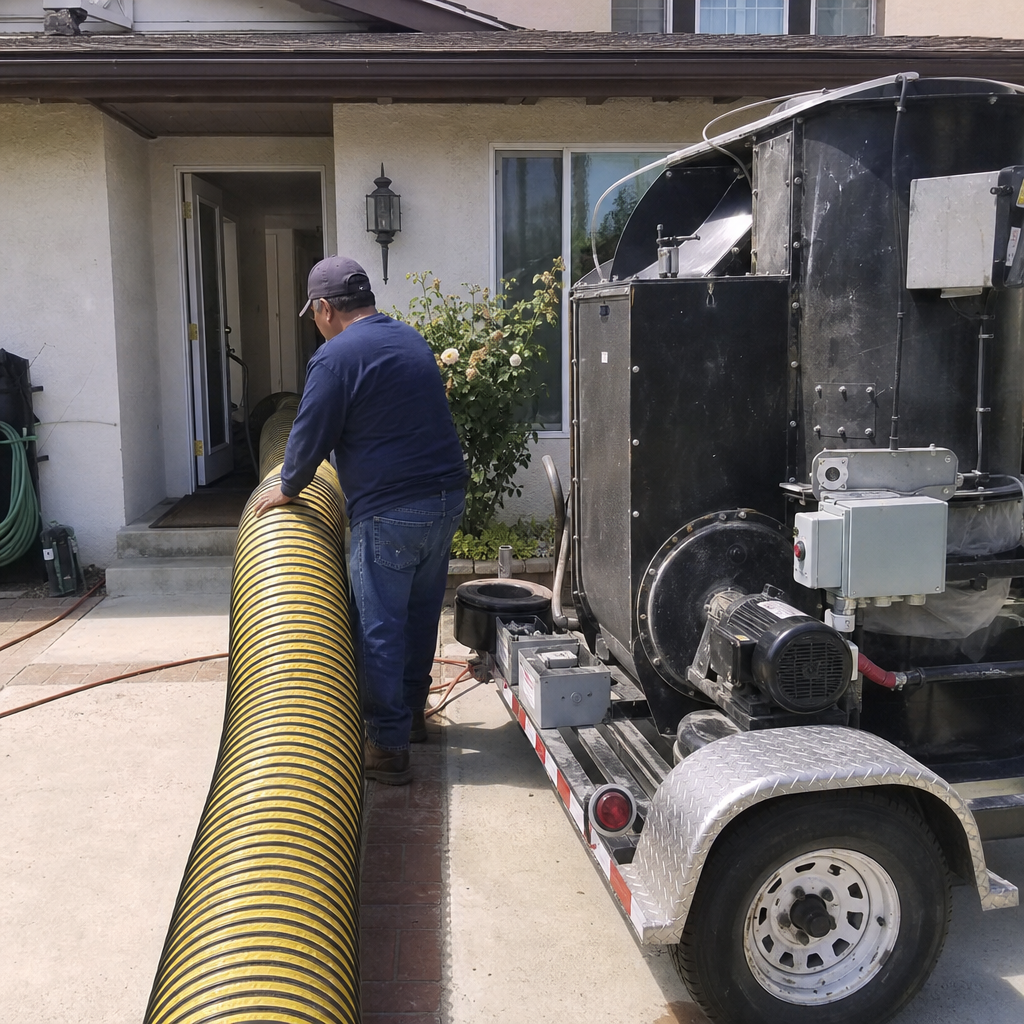
Where Covina homes have had partial HVAC retrofits, we often encounter later-generation flex duct that’s failed prematurely. The 2014 Colby Fire in the Glendora foothills just north of Covina pushed heavy smoke and ash through outdoor units; flex duct insulation in homes near the 91724 ZIP absorbed that load, and the acidic residue accelerated liner degradation. We replace compromised flex runs with properly sized, insulated flex or transition to hard pipe where routing allows, always sealing the connection points with mastic rather than relying on zip ties and hope.
Duct Insulation
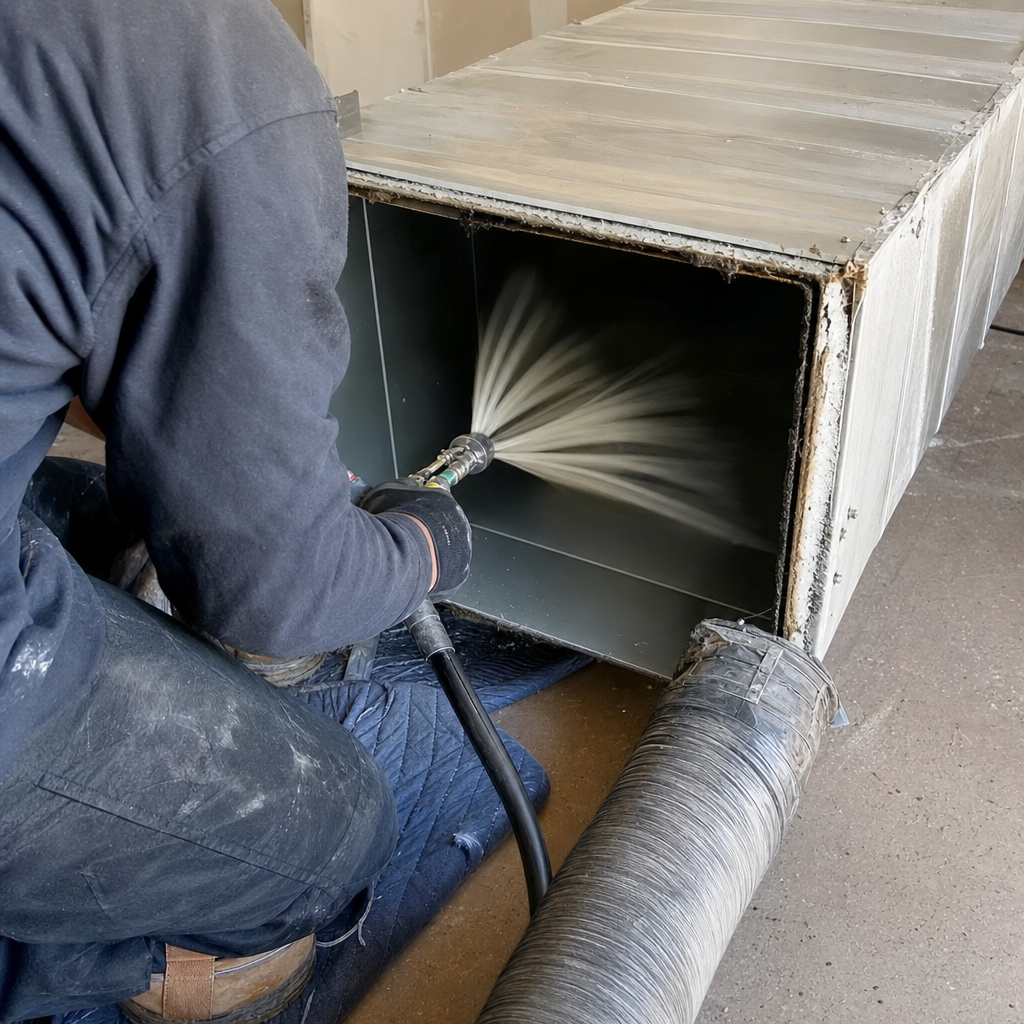
Covina’s summer attic temperatures routinely exceed 140°F. Uninsulated or degraded duct insulation means your cooled air is warming before it reaches the register. We reinsulate metal trunks with formaldehyde-free fiberglass wrap or replace damaged flex duct with R-8 insulated product, paying special attention to supply lines running through vented attics—the standard configuration in Covina’s ranch homes.
What happens when you call
- 1
A real person answersNo phone trees — you reach a local pro.
- 2
You get an upfront price rangeHonest numbers before anyone is dispatched.
- 3
A background-checked tech heads outLicensed & insured, dispatched right away.
- 4
You approve before work beginsNothing starts until you say go.
Trusted Brands We Service in Covina
We maintain working stock of repair components for the systems Covina homeowners actually have: Rotobrush and Nikro equipment for mechanical cleaning and debris extraction, Honeywell media filters and electronic air cleaner components for post-repair air quality upgrades, and professional-grade mastic compounds formulated for the thermal cycling seen in San Gabriel Valley attics. Richard Anderson specs Guardsman treatments where duct sanitizing follows repair work. Because we carry common fittings, clamps, and sealant on every truck, most Covina repairs don’t wait for parts orders.
Common Duct Repair & Sealing Problems We See in Covina Homes
- Deteriorated duct board liners shedding fibers into supply air. The original fiberglass-lined duct board in 1950s Covina ranches has reached end of life. The interior surface degrades to a fuzzy mess that bypasses standard filter pleats and circulates through every room.
- Unsealed metal trunk joints leaking Santa Ana dust and attic debris. Every fall, the Santa Ana winds pressurize Covina’s attics and force fine dust through gaps that were never properly sealed when the home was built. Homeowners notice the seasonal dust spike immediately.
- Wildfire smoke-saturated flex duct insulation from events like the 2014 Colby Fire. Flex duct near outdoor air intakes absorbed heavy particulate loads during that fire and subsequent mountain corridor burns. The insulation degrades, hidden tears develop, and thermal performance collapses.
- Charcoal-gray smog-soot coating in metal trunk lines. This is Covina’s signature finding. In a 1950s ranch on Citrus Avenue, we found the supply trunk lines coated in that brick-hard smog-soot—decades of trapped San Gabriel Valley air pollution. Our crew applied Rotobrush agitation, sealed every joint with mastic, and restored negative pressure so the system no longer kicked debris into the bedrooms.
Pricing for Duct Repair & Sealing in Covina, CA
Here’s what duct repair and sealing costs in Covina’s current market:
- Mastic sealant application (typical ranch home, full system): $280–$450
- Flex duct repair/replacement (per run): $180–$340
- Metal duct repair (patch or section replacement): $220–$480
- Air leak detection and targeted sealing: $200–$380
- Duct insulation upgrade (per trunk line): $160–$290
Full-system sealing in a typical 1,200-square-foot Covina ranch runs $380–$650. Costs rise if we need to replace multiple flex runs, access buried ductwork under low-pitch rooflines common in 1960s tracts, or remediate rodent damage in attics with blown insulation. We quote upfront before starting work—no open-ended billing. Call (833) 958-5022 for an exact figure; estimates are free and include a camera inspection of accessible trunk lines.
We Also Serve Cities Near Covina
Richard Anderson and our Duct Repair & Sealing crew regularly work in Vincent, Charter Oak, Azusa, and Citrus—all sharing Covina’s San Gabriel Valley air quality challenges and similar postwar housing stock. The same smog-trap dynamics, Santa Ana dust infiltration, and aging ranch-home ductwork apply across these communities.
Serving Covina, CA — Our Local Coverage Area
We’re based in the Covina area and know this community well. Use the map below to see our service coverage — if you’re nearby, we can almost certainly help.
FAQs — Duct Repair & Sealing in Covina
That residue is pre-catalytic-converter-era vehicle emissions—decades of trapped San Gabriel Valley smog—that baked onto your metal trunk lines before anyone thought to clean the system. Covina’s position against the San Gabriel Mountains creates a dead-end for basin air pollution, and the 1950s–1970s ranches here have ductwork that absorbed it continuously. Call (833) 958-5022 and we’ll show you exactly what your camera inspection reveals.
Yes, significantly—if the sealing is done with mastic compound rather than tape. Most Covina homes have unsealed or poorly sealed trunk joints that act as intake ports when attic pressure spikes during Santa Ana events. Mastic sealing closes these paths permanently. Call (833) 958-5022 for a leak detection test before the next wind season.
We do. Covina’s larger lots, especially near the 91724 perimeter, often have detached workshops or converted garages with independent duct systems. Richard Anderson assesses these as part of our standard service call if they’re accessible and use conventional ducting. Call (833) 958-5022 to describe your setup.
Wildfire smoke pushes heavy ash and coarse particulate directly into outdoor units and return-air intakes. The 2014 Colby Fire saturated flex duct insulation in homes across northern Covina, and subsequent burns in the Glendora-Azusa corridor continue to load systems. We inspect for smoke-damaged insulation, degraded flex liners, and filter bypass that lets ash reach your trunk lines. Call (833) 958-5022 if you’ve noticed odors or dust spikes after recent fire activity.
Mastic is substantially better for Covina’s conditions. Duct tape adhesive fails within 1–3 years in hot attics; mastic remains flexible and bonded for decades. In 1960s Covina ranches with original sheet-metal trunks, we exclusively use brush-applied mastic because the thermal cycling and particulate load here destroy tape seals rapidly. Call (833) 958-5022 and we’ll show you the difference on your own joints.
Ready to stop leaking conditioned air and circulating decades of San Gabriel Valley particulate? Richard Anderson will personally inspect your Covina home’s ductwork, explain what we find, and quote the repair before any work begins. No subcontractors. No equipment you’ve never heard of. Just 14 years of specialized duct expertise applied to your specific system.
Call (833) 958-5022 for your free estimate.
Written by Richard Anderson, Owner at Landmark Air Duct Cleaning Service California, serving Covina and the San Gabriel Valley since 2010.