


Fast, Reliable Dryer Vent Cleaning Across Charter Oak
Dryer vent cleaning in Charter Oak typically runs $180–$340 for standard residential systems and $280–$480 for heavy-duty workshop or acreage setups with longer duct runs. Most jobs are completed in a single visit, with Richard Anderson personally handling the inspection and cleaning. Call (833) 958-5022 for a free estimate.
We’ve been driving out to Charter Oak from our base in Bell for 14 years, and we know the difference between a standard suburban laundry room and the detached workshops, guest houses, and acreage properties that define this community. Richard Anderson shows up — not a crew you’ve never met. Whether you’re off North Larkwood Avenue, near the Charter Oak High School corridor, or back against the foothills toward Glendora, we bring professional-grade Rotobrush and Nikro equipment sized for the real systems we find here. Charter Oak’s ranch-style homes and larger lots aren’t an afterthought for us; they’re the majority of what we service in the 91724 zip code.
Why Landmark Air Duct Cleaning Service California Is Charter Oak’s Preferred Dryer Vent Cleaning Company
Charter Oak homeowners have left us enough reviews to build a 4.9-star average across 364+ verified customers — and we notice how many mention the same thing: Richard arrived, looked at the actual setup, and didn’t try to sell what wasn’t needed. That direct accountability matters especially here, where properties often have non-standard vent configurations that franchise crews misdiagnose or walk away from.
Our response time to Charter Oak averages 45–60 minutes from dispatch, and we schedule with realistic windows because we know the area — the winding streets above Foothill Boulevard, the longer driveways off Charter Oak Road, the properties where the “main house” and the workshop are two separate structures with two separate vent systems. We’ve cleared lint plugs from 40-foot attic runs, installed bird guards after Santa Ana wind events, and rerouted vents that original builders routed through uninsulated crawl spaces that now sag and trap moisture.
We also understand the local air quality burden. Charter Oak sits at the base of the San Gabriel Mountains in one of California’s most documented particulate-pollution corridors — the valley bowl geography traps smog, vehicle exhaust from the nearby 210 Freeway, and seasonal wildfire smoke from the adjacent foothill fire corridors, causing duct systems here to accumulate fine PM2.5 debris measurably faster than in coastal LA communities. This means Charter Oak homeowners realistically need cleaning cycles closer to every 3–4 years rather than the national 5–7 year guideline. We’re not guessing at this; we’ve pulled ash and char particulate from return-air plenums after fire seasons, and we’ve seen how that same contamination works its way into dryer vent systems through shared wall cavities and attic spaces.
Our Dryer Vent Cleaning Services in Charter Oak
Dryer Vent Inspection
Every Charter Oak job starts with a camera inspection. Richard Anderson runs a borescope through the full duct length, and on these older ranch-style properties, we regularly find surprises: original 4-inch ducts that were never upgraded when a commercial-grade dryer was installed, sections where fiberglass duct board has delaminated and created lint traps inside the wall, or sagging flexible transitions in attic runs that pool condensation and compact lint into concrete-like blockages. The inspection takes 15–20 minutes and gives us — and you — a clear picture of what’s actually happening inside the system. We document everything and explain before any work begins.
Vent Cleaning & Lint Removal
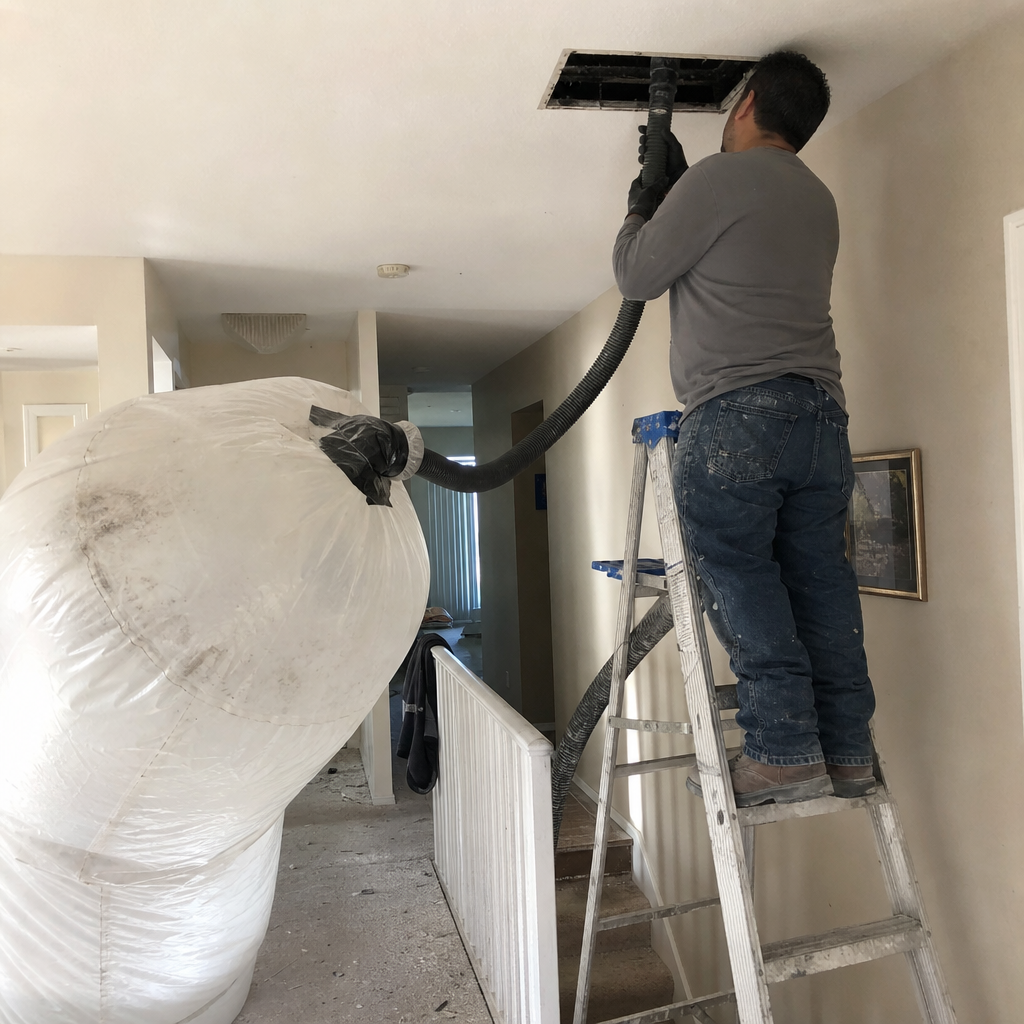
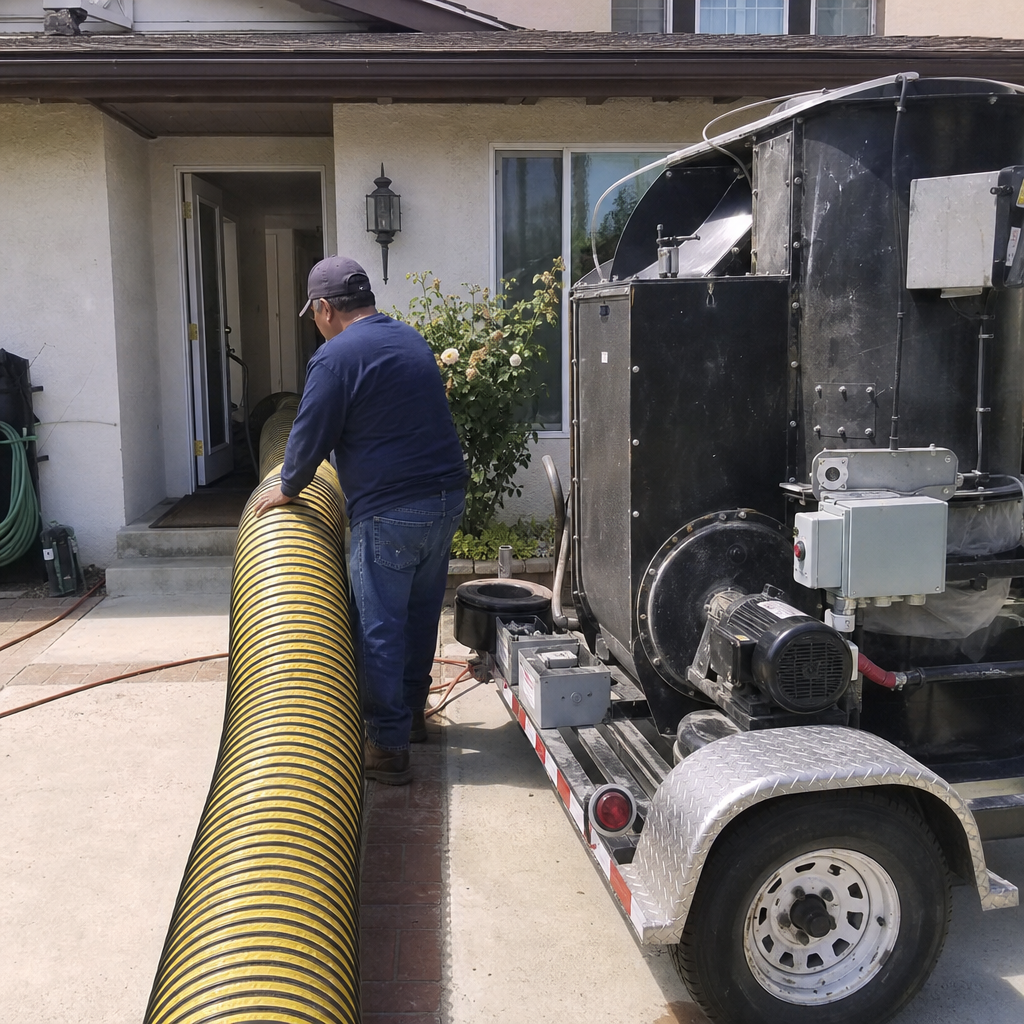
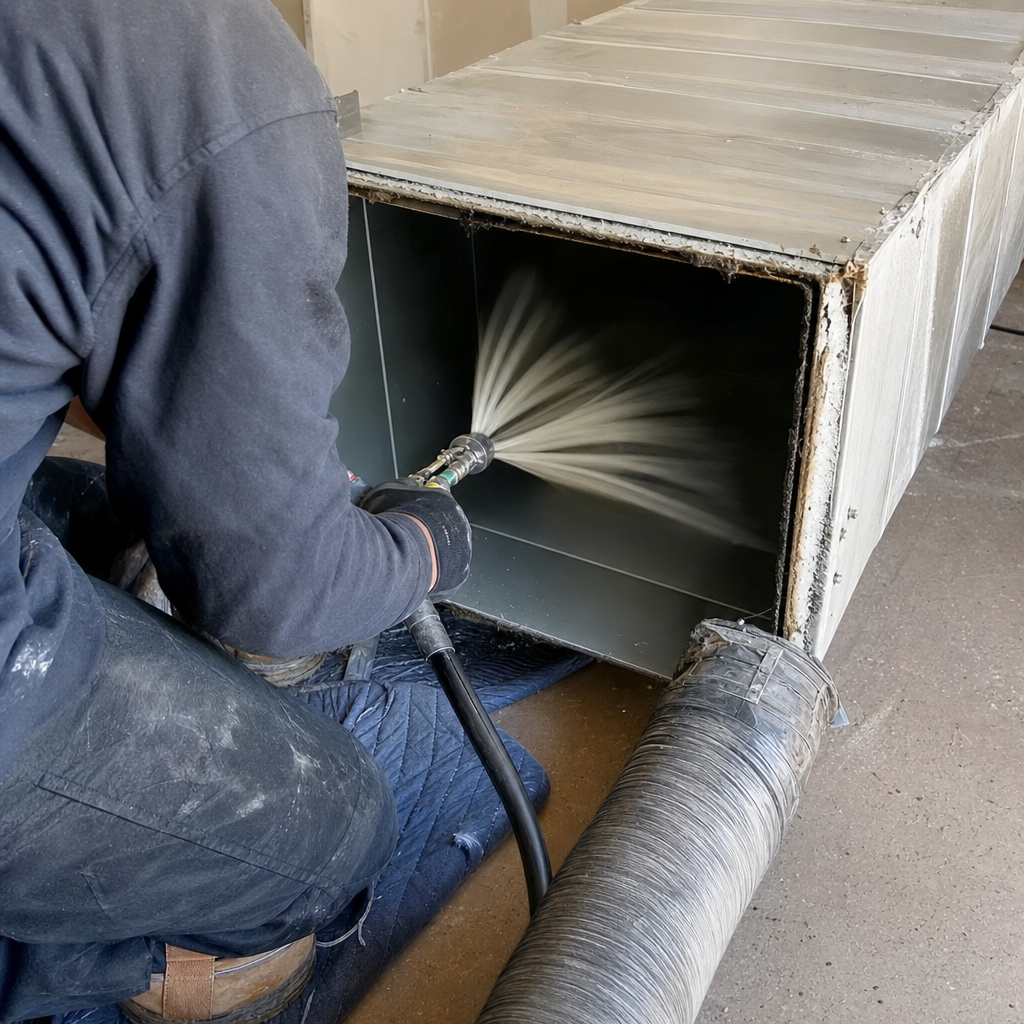
This is where our Dryer Vent Cleaning team separates from handyman operations. We use Rotobrush rotary brush systems with flexible shafts sized to the duct diameter, paired with Nikro negative-air HEPA extraction — the same equipment commercial restoration contractors use. For Charter Oak’s standard residential vents, that’s typically a 4-inch brush with aggressive bristle pattern and simultaneous vacuum pull. For the heavier-duty systems we find in detached workshops and acreage properties, we scale up.
In Charter Oak’s acreage properties, detached workshops often have heavy-duty dryer vents with 6-inch metal ducts and oversized lint traps that demand industrial-grade cleaning tools—standard residential brushes can’t reach the full length or dislodge compacted lint in these larger systems. We’ve developed specific protocols for these: longer brush shafts, higher-torque drive heads, and vacuum CFM ratings that match the duct volume. We serviced a rancher on North Larkwood Avenue whose detached workshop had a 4-inch vent running 40 feet through an uninsulated attic; the original homeowner had installed a commercial-grade dryer with a 6-inch exhaust. We used our Rotobrush with a 1.5-inch flexible shaft and a HEPA vacuum to clear a 2-inch-thick lint plug near the exterior cap, restoring airflow from 50 CFM to over 200 CFM. That homeowner’s dryer had been taking 90 minutes per load; afterward, 35 minutes.
Vent Rerouting
Charter Oak’s housing stock — predominantly 1950s–1970s ranch-style tract homes built during the San Gabriel Valley’s postwar suburban expansion — includes original vent routes that no longer make sense. Many of these homes retain original sheet-metal ductwork or early fiberglass duct board that is now 50–70 years old and prone to inner liner delamination and joint separation. We reroute vents that were originally run through uninsulated attics where summer heat degrades flexible transition hose, or through crawl spaces where ground moisture rusts metal fittings. A proper reroute shortens the run, eliminates sag points, and uses solid metal ducting with sealed joints. For detached workshops on large Charter Oak properties, we often reroute to exterior wall termination rather than roof or attic exit, reducing fire risk and simplifying future maintenance access.
Bird Guard Installation & Vent Cap Replacement
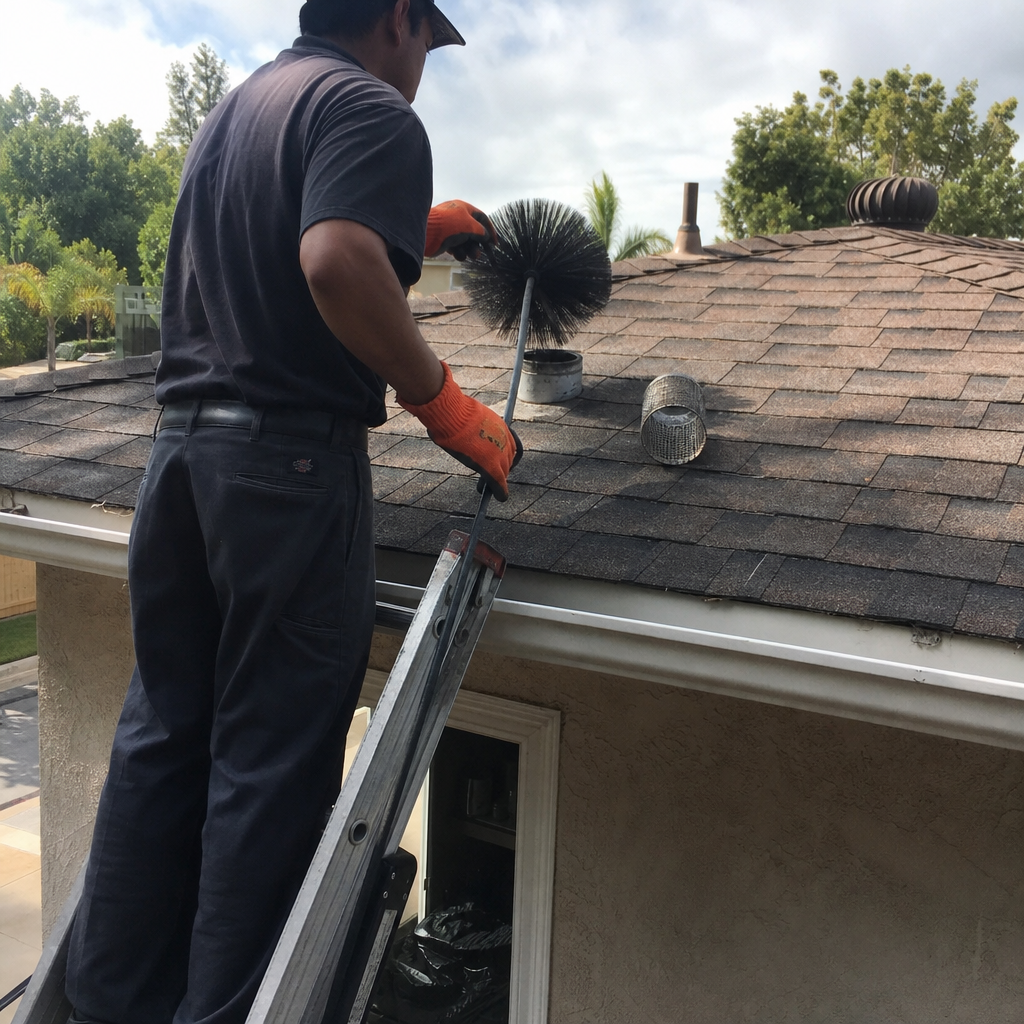
The Santa Ana winds that sweep through Charter Oak’s foothill interface don’t just carry dust — they drive birds and small mammals toward sheltered vent terminations. We install stainless steel bird guards with proper mesh sizing: tight enough to exclude nesting material, open enough to maintain exhaust airflow. We also replace deteriorated plastic vent caps that have cracked after decades of UV exposure, upgrading to metal caps with integrated dampers and guard screens. This is particularly important for Charter Oak properties where the vent terminates on a workshop or outbuilding that’s checked less frequently than the main house.
What happens when you call
- 1
A real person answersNo phone trees — you reach a local pro.
- 2
You get an upfront price rangeHonest numbers before anyone is dispatched.
- 3
A background-checked tech heads outLicensed & insured, dispatched right away.
- 4
You approve before work beginsNothing starts until you say go.
Trusted Brands We Service in Charter Oak
We work with Honeywell and Aprilaire ventilation components regularly found in Charter Oak’s upgraded systems, and we stock common vent caps, transition fittings, and bird guard sizes that fit the 4-inch and 6-inch ducts typical to this market. Our Nikro HEPA vacuums and Rotobrush drive systems are maintained to manufacturer spec — no improvised equipment, no consumer-grade shop vacs pretending to be extraction systems. When we need specialized parts for older Abatement Technologies components still running in some Charter Oak properties, we source with turnaround that keeps your job on schedule. Richard Anderson handles the equipment selection personally; he’s not sending a junior tech to figure out whether your system needs a standard or heavy-duty brush head.
Common Dryer Vent Cleaning Problems We See in Charter Oak Homes
- Oversized workshop doors allow debris intrusion during high winds. Charter Oak’s acreage properties with detached workshops often have large roll-up or barn-style doors that don’t seal tightly. During Santa Ana wind events, dust, leaves, and nesting material enter the building and get drawn into the dryer intake, accelerating lint buildup and creating attractive nesting sites for birds near warm vent terminations.
- Longer vent runs sag and create hidden blockages. The extended distances between main houses and outbuildings on Charter Oak’s larger lots mean vent runs of 25–40 feet are common. These longer spans sag between support points, especially where they pass through uninsulated attics that see 140°F+ summer temperatures. Lint collects at low points and compacts into plugs that standard cleaning can’t reach without camera location and targeted mechanical agitation.
- DIY leaf blower attempts push lint deeper. Charter Oak’s self-reliant homeowner culture means we regularly find vents that someone tried to clear with a leaf blower from the exterior. This doesn’t extract lint — it compresses it into the duct midpoint, often creating a worse blockage than before. We’ve had to disassemble duct sections to remove these impacted plugs.
- Wildfire ash contamination in shared wall cavities. After fire seasons, HVAC technicians in Charter Oak commonly find ash and char-particulate buildup in return-air plenums — a direct result of the community sitting within a few miles of the foothill fire zones above Glendora and Azusa — a contamination pattern essentially absent in coastal LA zip codes just 20 miles west. This same ash works into dryer vent systems through construction gaps and aging duct joints, creating a fine, gritty residue that accelerates wear on flexible connectors and traps additional lint.
Pricing for Dryer Vent Cleaning in Charter Oak, CA
| Service | Typical Range in Charter Oak |
|---|---|
| Standard residential vent cleaning (single-family, ≤15 ft run) | $180–$240 |
| Extended run or attic-access cleaning (15–30 ft) | $240–$320 |
| Heavy-duty workshop/acreage system (6-inch duct, >30 ft) | $280–$480 |
| Vent rerouting (materials + labor) | $340–$620 |
| Bird guard installation | $85–$140 |
| Vent cap replacement | $75–$125 |
| Camera inspection (standalone) | $95–$125 |
What moves a job toward the higher end: multiple bends, roof or high-wall termination requiring ladder work, removal of significant nesting material, or access issues like finished basement ceilings. We quote upfront after inspection — no open-ended billing. Estimates are free. Call (833) 958-5022 and Richard will walk through your specific setup.
We Also Serve Cities Near Charter Oak
Our service radius covers the full San Gabriel Valley foothill corridor. We regularly run dryer vent cleaning in Covina for the downtown corridor properties, San Dimas for the older hillside homes, Vincent for agricultural and semi-rural acreage, and Glendora for the mountain-adjacent communities with similar wildfire exposure concerns. Each city gets the same direct service: Richard Anderson on every job, professional equipment, honest assessment.
Serving Charter Oak, CA — Our Local Coverage Area
We’re based in the Charter Oak area and know this community well. Use the map below to see our service coverage — if you’re nearby, we can almost certainly help.
FAQs — Dryer Vent Cleaning in Charter Oak
Every 3–4 years for most Charter Oak properties, compared to the national 5–7 year guideline. The combination of valley-bowl pollution trapping, seasonal wildfire smoke from the San Gabriel Mountain foothills, and Santa Ana dust events means vents here accumulate debris faster. If you have a detached workshop or acreage property with longer duct runs, inspect annually and clean every 2–3 years. Call (833) 958-5022 — we’ll check your actual system and give you a specific interval.
Most Charter Oak ranch homes built in the 1950s–1970s have 4-inch galvanized steel rigid duct or early flexible aluminum transition hose, often routed through uninsulated attics or crawl spaces. Many retain original sheet-metal ductwork or early fiberglass duct board that is now 50–70 years old and prone to inner liner delamination and joint separation. Detached workshops may have been upgraded to 6-inch commercial-grade systems without proper matching. We inspect before quoting because the actual configuration varies block by block.
Yes, if your vent terminates on an exterior wall without one. Charter Oak’s foothill location and Santa Ana wind patterns drive birds toward sheltered vent openings, especially on less-frequented outbuildings. A proper stainless steel bird guard with appropriate mesh prevents nesting without restricting exhaust airflow. We install them as standard on replacement caps and can retrofit existing terminations during cleaning visits.
Yes — this is a significant portion of our Charter Oak work. We reroute long attic or crawl-space runs to shorter, exterior-wall terminations using solid metal ducting with sealed joints. For workshops with commercial-grade dryers, we ensure the new route supports proper CFM and doesn’t create new sag points. Richard Anderson scopes the property layout personally and quotes the full reroute with materials and labor included.
Charter Oak sits within a documented particulate-pollution corridor where wildfire smoke from the San Gabriel Mountain foothills — above Glendora and Azusa — drifts and settles into the valley bowl. Fine ash and PM2.5 debris enter homes through construction gaps, aging duct joints, and attic ventilation, then work into dryer vent systems through shared wall cavities and ceiling penetrations. This is a genuine local phenomenon we verify annually in post-fire-season inspections. Professional cleaning with HEPA-contained extraction removes it; standard residential vacuums don’t.
Ready to get your Charter Oak dryer vent properly inspected and cleaned? Richard Anderson will handle your job personally — no subcontractors, no franchise crew rotations. Call (833) 958-5022 for a free estimate, or ask about our full indoor air quality scope: air duct cleaning, HVAC cleaning, duct repair and sealing, and air sanitizing — the full picture handled in one visit, from cleaning to sealing to sanitizing.
Written by Richard Anderson, Owner at Landmark Air Duct Cleaning Service California, serving Charter Oak and the San Gabriel Valley since 2010.