
Nikro Air Duct Cleaning in Bell: A Homeowner’s Guide
Nikro air duct cleaning in Bell typically involves professional-grade negative-pressure vacuum systems that pull loosened debris out of your ductwork rather than pushing it deeper into your home. A legitimate Nikro setup costs a contractor $8,000–$15,000, which is why the equipment separates serious operators from fly-by-night outfits using shop vacs with brush attachments. If you’d rather not spend your weekend verifying a contractor’s gear, Landmark Air Duct Cleaning Service California home offers free estimates — call (833) 958-5022.
When a contractor mentions Nikro equipment, most homeowners nod along. Here’s what it actually means for the quality of your cleaning job.
What Nikro Equipment Actually Does (And Why Consumer Tools Can’t Match It)
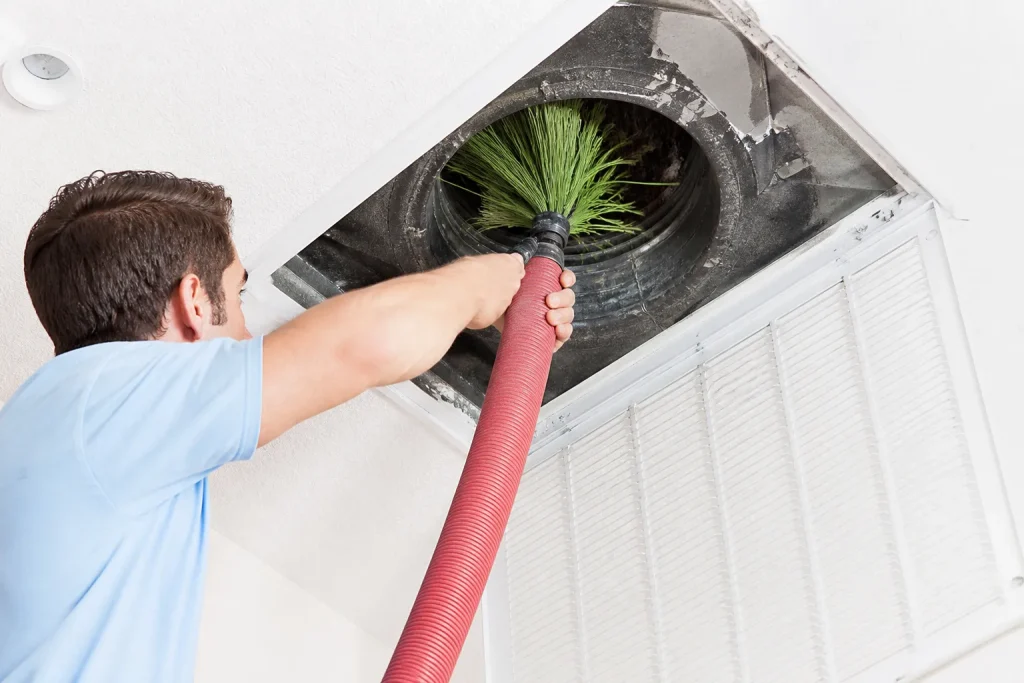
Nikro builds negative-air machines — industrial vacuums designed to create suction inside your duct system while a separate agitation tool knocks debris loose. Think of it like this: the agitator (often a Rotobrush or compressed-air whip) scrubs the duct walls, and the Nikro vacuum pulls that dislodged dust, pollen, and construction residue into a sealed collection chamber before it escapes into your living space.
Consumer-grade alternatives do the opposite. A shop vac with a 2.5-inch hose pushed into a vent opening blows as much debris around as it captures. We’ve opened return plenums in Bell’s older homes near the I-710 corridor where previous “cleanings” with consumer equipment actually packed dust tighter into elbow joints. The homeowner paid $89 for a Groupon special and ended up with worse airflow than when they started.
Here’s what separates legitimate Nikro systems:
- Sealed containment: HEPA-filtered collection chambers trap particles down to 0.3 microns — critical for Bell households with allergy-sensitive family members
- Calibrated negative pressure: The vacuum maintains consistent suction even as duct diameter changes, preventing debris from bypassing collection
- Proper CFM ratings: Nikro’s portable units move 2,000–5,000 cubic feet per minute, versus a shop vac’s 150–200 CFM
- Compatible agitation: Designed to work with rotary brushes and air whips that actually contact duct surfaces, not just wave air around
We use Nikro negative-air units on every full-system cleaning in Bell because the physics matter. You can’t negotiate with airflow — either you’re extracting debris at the source or you’re redistributing it.
Portable Nikro Units vs. Truck-Mounted Systems: Which Fits Bell Homes?
Not every home needs the same setup. Nikro manufactures both portable units (wheeled machines carried into your home) and truck-mounted systems (powered by the contractor’s vehicle engine). For Bell’s typical housing stock — single-family homes built 1940s–1980s, generally 1,000–1,800 square feet with original ductwork in attics or crawl spaces — portable units usually make more sense.
Truck-mounted systems deliver higher CFM and work well for commercial buildings or very large homes with extensive duct runs. But they’re overkill for most Bell properties and create logistical headaches: the truck must park close to your home, hoses snake through windows or doors, and the engine noise disrupts neighbors. In Bell’s tighter lot configurations — especially the neighborhoods east of Atlantic Avenue where driveway access is limited — a portable Nikro unit lets us work inside your garage or utility room without the circus.
We’ve completed cleanings in Bell’s Blythe Street corridor where truck-mounted rigs simply wouldn’t fit the parking situation. The portable Nikro unit rolled through a side gate, we set up in the laundry room, and the job finished in under three hours. The homeowner’s Aprilaire media air cleaner (installed the following week) now has genuinely clean air to filter instead of recirculating yesterday’s dust.
Ask your contractor specifically: “Are you bringing a portable or truck-mounted system, and why do you recommend that for my house?” Their answer reveals whether they’re matching equipment to conditions or just running what they own.
How to Verify a Contractor’s Nikro Claims (It’s Easier Than You Think)
Here’s where the duct cleaning industry gets sketchy. Any contractor can type “Nikro” on their website. Actually showing up with the equipment is different. We’ve heard from Bell homeowners who were told they’d get “professional negative-air cleaning” and watched a technician unload a Ridgid shop vac from a sedan trunk.
Three quick verification steps:
- Ask for the model number before booking. Common legitimate Nikro portable units include the PS1000, PS2000, and HP20 series. If they can’t name a model, they don’t own one.
- Request a photo of their actual equipment. Any established operator has phone photos of their rig. Look for the Nikro logo on a substantial wheeled unit — not a sticker slapped on generic hardware.
- Check the hose diameter during setup. Nikro systems use 8-inch or 10-inch collection hoses. A 2.5-inch shop vac hose is an immediate red flag.
Richard shows up — not a crew you’ve never met. When we pull the Nikro unit off our van at a Bell job, homeowners can inspect the setup before we start. Fourteen years focused on one trade means we don’t mind the scrutiny; we’ve got nothing to hide.
One thing we don’t do: claim our equipment does work it can’t. Which brings us to the next point.
What Nikro Equipment Doesn’t Fix: The Operator Matters More Than the Machine
A $12,000 Nikro vacuum in unskilled hands is an expensive way to do a mediocre job. The equipment creates the conditions for proper cleaning; the technician determines whether those conditions get used effectively.
Common operator failures we see correcting other contractors’ work in Bell:
- Insufficient access creation: Nikro systems need properly sized access holes in ductwork to attach collection hoses. Cutting corners here destroys suction efficiency
- Wrong agitation pairing: Using a rotary brush in fiberglass flex duct (rips it) or air whips in rigid metal with heavy debris buildup (insufficient contact)
- Skipping return-side cleaning: The Nikro collects what the agitator loosens — if the technician never agitates the return plenum, that debris stays put
- No post-cleaning verification: We use Honeywell airflow meters and visual scope inspection to confirm results, not just “trust me, it’s clean”
14 years focused on one trade: cleaner air, cleaner ducts. We’ve developed specific protocols for Bell’s common duct configurations — the galvanized steel trunk-and-branch systems in pre-1970s homes, the flex-duct retrofits from the 1980s energy-efficiency push, the occasional asbestos-wrapped mains that require modified approaches. The Nikro unit is constant; our technique adapts to what we find.
When to call a pro: If your ducts haven’t been cleaned in 5+ years, if you’re noticing dust accumulation on vents within weeks of cleaning, or if your HVAC system runs constantly without maintaining temperature, the problem likely requires professional-grade extraction — not another DIY attempt.
Related services in Bell: We also handle Dryer Vent Cleaning in Bell Gardens and HVAC Cleaning in Bell Gardens for homeowners wanting complete system maintenance.
Why We Use Nikro Specifically for Bell Home Conditions
Bell sits in the Los Angeles Basin’s southeastern pocket, which creates specific challenges for indoor air quality. The I-710 freeway corridor generates fine particulate matter that infiltrates older homes with less effective envelope sealing. Summer inversions trap pollutants. Many Bell neighborhoods have soil with higher clay content, meaning more dust intrusion through crawl space vents and foundation gaps.
We’ve cleaned ducts in Bell homes where the previous owner ran a home woodworking business, where post-remodel construction debris sat in returns for years, where pet dander had formed actual felted layers on duct walls. The Nikro’s sustained negative pressure — maintained even when we’re working distant branch lines — prevents that debris from redepositing in bedrooms and living spaces during cleaning.
Our typical Bell job protocol: Rotobrush agitation on metal mains, compressed-air whipping on flex branches, Nikro negative-air collection throughout, then Guardsman antimicrobial treatment on request for households with respiratory sensitivities. The equipment combination isn’t arbitrary — it’s evolved through hundreds of local jobs, including a memorable 2023 cleanup on Gage Avenue where we extracted what appeared to be decades of automotive shop residue from a converted garage’s ductwork.
Professional Rotobrush and Nikro systems — not a shop vac and a sales pitch. 364+ homeowners, 4.9 stars — consistency you can verify.
Key Takeaways
- Nikro equipment refers to professional negative-air vacuum systems, not a cleaning method itself
- Portable Nikro units suit most Bell single-family homes better than truck-mounted alternatives
- Verify contractor claims by asking for model numbers, equipment photos, and observing hose diameter
- The technician’s technique matters as much as the machine — equipment doesn’t compensate for poor access, wrong agitation, or skipped steps
- Bell’s basin location and older housing stock create specific debris conditions that proper Nikro extraction addresses effectively
The Bottom Line
Nikro equipment is a reliable indicator of professional commitment — it’s too expensive for casual operators, and its design solves real problems that consumer tools can’t touch. But the contractor running it still needs to know which access points to cut, which agitation method matches your duct type, and how to verify the job actually worked.
From cleaning to sealing to sanitizing — the full picture handled in one visit. If you’re in Bell and want to discuss whether your home needs professional-grade duct extraction, Landmark Air Duct Cleaning Service California offers free estimates. Richard Anderson personally leads every job, and we’ll show you the equipment before we start. Call (833) 958-5022.
Frequently Asked Questions
Most Bell homes pay between $350 and $750 for complete system cleaning with professional negative-air equipment, depending on ductwork complexity and accessibility. Smaller homes with straightforward trunk-and-branch layouts fall at the lower end; homes with extensive flex-duct additions or crawl space access challenges trend higher. Call (833) 958-5022 for an exact quote — estimates are free.
They do different jobs that work together. Rotobrush is an agitation tool that physically scrubs duct walls; Nikro is a negative-air collection system that extracts loosened debris. A proper cleaning uses both — the Rotobrush (or equivalent agitation) knocks debris free, and the Nikro pulls it into sealed containment. Contractors claiming one replaces the other don’t understand the process.
Every 3–5 years for typical households, sooner if you have pets, recent construction, or visible mold growth. Bell’s basin air quality and older home stock often push toward the shorter interval — we’ve found significant buildup in 2-year intervals for homes near major thoroughfares. If your vents collect visible dust within a month of cleaning, that’s a sign your system needs professional attention rather than another surface wipe.
Absolutely — and you should. Ask to see the unit before setup, check for the Nikro brand marking on a substantial wheeled cabinet (not a handheld device), and confirm the collection hose is 8 inches or larger in diameter. A legitimate operator won’t be offended; we encourage Bell homeowners to inspect our setup. If a contractor resists or makes excuses, that’s your answer about their equipment claims.
Written by Richard Anderson, Owner & Lead Technician at Landmark Air Duct Cleaning Service California, serving Bell since 2012.
Need Air Duct Cleaning Help?
Call Landmark Air Duct Cleaning Service California — licensed & insured, here with fast after-hours help in California.
(833) 958-5022